Sunday, January 28, 2024

He's Dying

This is an excerpt from my novel The Secrets of Galapagos Man. It is the opening episode. The Kindle and paperback versions can be found on Amazon.


He's Dying

 “I figured it was my last chance to be somebody, to make something of my life,” Alex said. “So at thirty during the war. I enlisted. I wanted to be an officer. It seemed like it was all stacked against me.” 

Alex lay in his bed sunken and wasting away from a sickness no one could diagnose. It was unsettling seeing a man who just a few years ago stood six three and two hundred pounds. He still had massive hands and a barrel chest. Grey stubble covered his face like a burned forest. 

The room was the bedroom of a small home purchased a couple of years earlier. Present was an odor like a load of soiled laundry. A light layer of dust covered everything. The sun struggled to cast its rays through water-stained windows.

“What do you mean, Dad?” AJ said.

“When I went through the physical in basic training they asked me to do a deep knee bend. My knee was so swollen I could hardly walk on it. That disqualified me from OCS. In basic, they all called me ‘Dad’ or ‘Pop.’ I was the oldest guy in my company; hell I was the oldest guy in the battalion. War is for young men made up of old men. They took care of me. There were things that a guy my age and with my knees couldn‘t do. Yeah, they were a great bunch of guys. I‘d like to see them all one more time before I go.”

“Don’t talk that way, Dad,” AJ said. “You’re going to be okay.”

“No, I’m not, son. No, I’m not.” Alex looked at a framed photo of himself taken when he was in the Army. “I’m only half the man now that I was then, maybe even less than that. It’s amazing what years of hard living can do to you. Take care of yourself, son. Don’t let yourself go to hell.”

“I love you, Dad,” AJ said.

“I love you too, son,” Alex said and smiled.

“You’ve been a good Dad,” AJ said.

“No I haven’t,” Alex said. “Not even close. If I had it to do over I swear to god it would be different.”

“I know you would, Dad,” AJ said. “You tried your best.”

“No, I didn’t, son,” Alex said. “But there’s some unfinished business. I have to get it off my chest. Nobody else knows.”

“Dad, you don’t have to tell me anything,” AJ said.

“Yes I do,” Alex said. “If I don’t tell you it will be gone forever. I must tell you.”

“Dad, let it be between you and god,” AJ said.

Alex smiled and chuckled with a cough. “God has nothing to do with it. Some things will die with me. You’ll never get that out of me.” Alex cleared his throat. “Go fix some coffee, son, I want you to stay for a while. I got a story to tell you.”

“Sure, Dad,” AJ said. “I’ll put some coffee on.”

“Make it strong, son,” Alex said. “Make it good and strong.”

The coffee was started and AJ walked back the hallway to Alex’s bedroom. He had fallen asleep. AJ sat on a chair next to the bed for a moment expecting him to awaken. He wondered what heavy secret he had locked in his mind and wanted to allow it to escape. Alex seldom spoke of trivialities, it had to be something important to him. 

The sound of the coffee percolating started slow and hurried like a snare drum. 

AJ stood to check on the coffee. Alex said, “Um, that smells good. Put a little cream in it for me.”

“Sure thing, Dad, just the way you like it.”

Carefully AJ walked back the hallway with two cups of coffee on saucers. By the time he entered the room, Alex was sitting in bed. 

“That little snooze helped,” Alex said. “I feel pretty fresh. Not good enough to go fishin’, but fresh enough to tell you a story.”

AJ handed the coffee to him and he sipped it slowly. He smiled. “That’s good. Thank you, son.” He sat the coffee on the table next to the bed where a pack of Camels, a silver lighter, and a Louis L’Amour book, The Tall Stranger, lay face down and open. 

In many ways, Alex was a character from a L’Amour novel. He was tough and could carry his own with anyone who cared to do so. Alex lived out the lives of characters from L’Amour novels in the bars, honky-tonks, and dives throughout Muncie, Indiana. He was a tough man to follow. Everyone expected AJ to be a ’chip off the old block,’ but he cared little for revel rousing and the like. It was difficult for AJ to harmonize fatherhood with Alex’s lifestyle. That, though, was in the past. AJ thought his Dad was at a time in his life when it was necessary to atone for past inequities. At least that is what AJ was prepared for at this time.

Alex’s demeanor was gruff and seldom showed sentimentality or pity. AJ suspected little had been offered him in his time. He was reared in a tough era. He grew up learning to solve conflicts with his fists. This was going to be his memoir and AJ expected little to change.

“It’s a long story, son,” he said, “But it’s got to be told. What you do with it is for you to decide.”

“Sure, Dad,” AJ said and sipped the coffee. He placed it on the table next to him.

Alex looked at the two coffees. “That’s us, very different. You drink yours like a man, black. I could never drink it black. I sometimes add sugar.” He chuckled and slightly coughed. “At one time I wanted you to be like me, but the older I got I didn’t want that for you. Nobody told me how to be. I wished I had that. My dad tried, but I was too bull-headed. I was a know-it-all. My dad was really a good man. I wished he’d lived long enough for you to know him, but even by the time I was born he was an old man.”

“I would have liked to have known him too,” AJ said. “But, Dad, the man you are describing is yourself, I never knew. You were a good father.

Alex continued as if AJ said nothing. “He had a gentle side like you, but ya didn’t dare cross him,” Alex said. “I did it once. He put me on the ground so fast I didn’t know what happened. He was so strong and quick. That was the last time I said anything that resembled a crossword to him. I miss that old man. I wanted to please him, but he died before I really had a start in life. I suppose if he lived I would have done things to please him. I wanted his approval above all else. I don’t think he ever knew that.”

Alex reached for his coffee and sipped it. “The clock is ticking,” he said nodding to the clock on the dresser. “I got to get to the story.”

Friday, January 26, 2024

Danny's Last Supper

This is an excerpt from my novel All About Homeless
Hannah
. It is available at Amazon in paperback or Kindle version. 


Danny's Last Supper

Hannah stood on the corner wearing a green and red plaid scarf stuffed into a discarded blue snowmobile suit that she had to fight for at the shelter. She held a cardboard sign to passing motorists that read 'Homeless. Need money for food.' Hannah smiled at each passing car, but she did so with her lips clamped tight. She lost an incisor in a squabble over the rights to a dumpster three years earlier. 

A friend, Danny, dressed in a tattered Army field jacket and oversized wrinkled jeans called to her from across the street, "Look here Hannah I got some food. Anytime you're ready to eat." He held high two plastic shopping bags. 

Hannah liked Danny's smile. It was broad and friendly. He still had all his teeth. She followed him down an alley for three blocks. They walked across an open field and followed two sets of train tracks for a quarter-mile. Finally, they came to an empty warehouse. They squeezed inside a boarded-up side door and climbed four flights of stairs to the roof. 

"It's a pretty day isn't it Hannah." Danny smiled broadly beneath his scraggly stubble. 

"It sure is. Whatcha got to eat," Hannah said trying to look in the bags. 

"I got a whole mess of stuff." 

"You didn't steal it did you?" As if she was about to shame him. 


"No. I was standing in the parking lot of Wal-Mart with my lucky sign. That sign always works. This lady drives up, stops, gets out, opens her trunk, and reaches in, and hands me these two bags. I tell her 'thank you' and she says 'you should get a job.' I said to her, 'Would you hire somebody dressed like this?' She got really snooty and drove away." 

"Are you sure you want to share this with me?" 

"Sure," He said. "After all the times you shared with me." 

Danny pawed through the bag. "Look here Vienna Sausages. I ain't had them since I was a boy. They're good. I hope we got some crackers. I love Vienna Sausages with crackers. That's the only way to have them." 

Hannah pulled back the sack with her soiled hand. "There's your crackers and lookie there peanut butter and jelly! It's almost like being a kid." 

Danny dropped the sausages back into the sack and let it fall. He fell against the parapet of the building. He held his hands to his chest." 

Hannah looked at him frightfully. "Danny what is it." 

Danny smiled through gritted teeth and a pained face. "It's back again." 

"I'll go get help." 

"No, not this time Hannah." 

"What do you want me to do?" 

"Hannah, can you get Jose and Freddy? I want to share this with them." 

"But you may be dying!" 

"I am dying and I want you and Jose and Freddy with me." 

"I can't do that. I got to get help." 

"When this happened before they wouldn't let any of my friends in to see me. I could have died alone in a hospital. That ain't right. Don't let me die alone. Please get Jose and Freddy." 

Hannah removed her scarf and tucked it around Danny's neck. He smiled. 

"Danny I never told you, but your smile is good. I think about it all the time. I love you." 

"Get my friends Hannah. Get my friends." 

Hannah kissed Danny on the forehead and scurried down the steps and retraced the route that had brought them to the warehouse. She scurried the streets looking for Jose and Freddy. She asked everyone who was homeless. At length, she saw them together sharing a coffee huddled beside a dumpster. "Jose, Freddy," she said. 

"Hey Hannah, it looks like we got some good stuff in here," Jose said in a Latin accent motioning to the inside of the dumpster with his head. 

"I ain't seen no dumpster like this one since the fourth of July two years ago. I just wish we had a way to keep it from going bad." 

"You got to hurry. It's Danny. His heart again." 

"You call 911!" Freddy said. 

"Danny don't want that. He told me to get you two." 

"Then let's go!" Jose said. 

"But we got to call 911," Freddy insisted. 

"Danny was firm. We make him mad and he may die for sure on us. He did not want to die in the hospital, only with his friends." 

"Lead the way Hannah," Freddy said. 

They hurried along the streets at times nearly at a run speculating whether they would find him dead or alive. 

They reached the warehouse and climbed the steps to the roof. 

Danny was still leaning against the parapet. The groceries were arranged on his blanket before him. He smiled and slowly beckoned them with his weak arm. "Let's eat friends. I don't want to die a hungry man." He smiled and forced a chuckle. 

Slowly they sat. Danny passed the crackers and sausages. "I hope you don't mind. I was really hungry. I thought I was going to die for a moment so I ate a couple of sausages before you came. There you go Hannah, peanut butter and jelly on crackers. Sorry, but there was no bread." 

"That's okay Danny, you did good. You didn't have to do this." 

"Danny let me call 911," Freddy said. 

"It will be no good this time. I don't want to go on." 

"You can not give up my friend," Jose said. 

"Oh yes I can," Danny said resolutely. "I wish I had some wine. Take some apple juice," Danny said and passed a jug of apple juice. 

Danny leaned against the wall. His breathing was deeper and more rapid. "Hannah," he said just above a whisper. "There is an envelope in here." He pointed to his chest. "Take it to that address and don't leave until it is read. It's good to die among friends." 

Danny smiled and died. 

Sunday, January 21, 2024

The Murder of Gisele LaSwain

This is a short episode from my novella, Old Black Maggie. It is available in paperback or Kindle version. 


“It was just before the war. Things were good in town. Everybody was working and guys had money to burn. Guys go down to the strip club and watch the pretty ladies down there. Nothing wrong with that, you look and don’t touch. They’re really respectable girls. It’s an art, like dancing.”

“There was this beautiful dancer, she was going to the top. Her name was Gisele LaSwain. She was beautiful and talented. She could sing like a canary; sweet and soft. She had songs that could tear your heart out. She had moves like… Well never mind, she just had moves.”

“Old Black Maggie comes into the Rathskeller one cold winter night. She smelled awful. Like a rag that’s laid in the alley for a while. She sits at the bar and asks the bartender for a shot of rum to chase away the chill.”

“The bartender tells Old Black Maggie to skedaddle. Old Black Maggie demands a shot of rum. The bartender says to let me see the money first.”

“Old Black Maggie puts a curse on him. Then she turned to Gisele LaSwain and says in a real eerie voice, ’Satan was a beautiful angel that fell from heaven and so will you.’”

“Well, the bartender signaled for the bouncer to give her the bum’s rush. She was squawking and kicking like a chicken being choked. The bouncer tosses her out on the sidewalk.”

“That night Gisele LaSwain plunged to her death from the top of the Waldo Hotel. It was just at Old Black Maggie said; she plunged from heaven, a fallen angel. My, she was beautiful.”

“Nobody could prove anything, but two nights later Old Black Maggie came back in the Rathskeller and the bartender set a shot of rum in front of her, no questions asked.”

“I got to get back inside boys and close up the store,” Russell said. “You boys best be getting home. I’ve seen Old Black Maggie walk down the street in the middle of the night plenty of times.”

Everyone disbursed to their homes. Gary didn’t sleep that night and neither did the other boys who were at Russell’s Market that night.


Monday, January 15, 2024

Pal; from Shepherd's First Winter

Here we are in the dead of winter. What better than an excerpt from my novella, Shepherd's First Winter. It is available on Amazon. It can be purchased in paperback or on Kindle. 


 Pal

The snow came. It was in the night when it fell.

Shepherd scraped frost from a window in the dining room. White. He brewed coffee on the stove and slipped his clothing on. He jumped from the porch and into the snow. He was a child. He lay in the snow and looked upward and watched the snow fall on him. “The first snow, and I’m already mad,” he thought chuckling.

Two mornings later Shepherd sat in his chair in the living room. He was reading Call of the Wild. He heard dogs barking in the distance. He slung on his coat and stepped out on the front porch. He listened as the barking became louder. Over a ridge of snow in the direction of the stream, a dogsled team plodded toward the cabin.

The dogs and sled came to a stop only feet from the porch. A man in thick clothing and a fury-hooded parka walked from the rear of the sled to the steps of the porch. He slipped back the hood. It was Daniel smiling broadly.

“How are you doing, Shepherd?" Daniel said.

“I am doing well,” Shepherd said, “and you and your family?”

“We are native,” Daniel said. “We do well when things are bad.”

“Come in,” Shepherd said.“Let me warm you. I have coffee and pie. Do you like cherry pie?”

“It has been a long time,” Daniel said. “You go ahead. I’ll be with you in a moment. I will tend to my dogs.”

Shepherd went inside. He warmed some stew and placed two bowls on the table along with two slices of cherry pie and a steaming cup of coffee.

Shepherd heard Daniel stomp the snow from his boots. Daniel entered the cabin. Tucked in his arms held to his chest was a pup.

“My family and I were talking about you and how you might become lonely,” Daniel said. “A dog is a good gift. A good dog is the best gift.”

Daniel handed the pup to Shepherd.

“Look!” Daniel said. “He takes to you right away.”

Shepherd petted and smiled at the pup. “What kind of dog?”

“He is a Husky,” Daniel said.

“Does he have a name?” Shepherd said.

“No,” Daniel said, “he is yours, and it is up to you to name him.”

“Have you ever read Call of the Wild?” Shepherd said.

“You will name him, Buck?” Daniel said. “That name 's been taken.”

“You’re right,” Shepherd said.“I will call him Pal.”

“That’s a good name,” Daniel said. “He will be your pal.”

“How old is he?” Shepherd said.

“Two months,” Daniel said.

“I will have all winter to train him,” Shepherd said.“When spring comes he will be reading.”

Shepherd and Daniel sat down to a good meal of the stew and cherry pie.

Shepherd put the dishes in the sink and poured two glasses of whiskey.

“A man who lives alone must watch how much he drinks,” Daniel said. “Your life depends on how sober you are.”

“Don’t worry, Daniel,” Shepherd said, “only when guests arrive and the celebration of your gift.”

They sipped for an hour talking about the cold and surviving the wilderness.

“I must go now,” Daniel said. “Not much daylight remains.”

Shepherd opened the oven and pulled out another cherry pie. He wrapped it in cloth. “My gift to you and your family.”

“My wife and children have never had cherry pie,” Daniel said. “They will surely enjoy it.”

Daniel slung on his parka. He stepped over to the fireplace where Pal was asleep. He leaned down and said, “Take care of Shepherd.”

Shepherd walked with Daniel to the porch. Daniel packed the pie on the sled and rocked the sled free. The dogs sprung to their feet.

“Yaaw! Yaaw!” Daniel called out to his team of dogs. Daniel circled the dogs and sled around, and they headed down a gentle slope of snow toward the stream that led to the river.

As he watched Daniel skim over the snow, he thought about loneliness, real loneliness for the first time in his life. He realized that of all the things he planned for, that was the one thing he gave no attention.

Daniel was a man of the wilderness. He heard stories of loneliness and how it can shred a man.

Shepherd returned to the cabin. He pulled his chair closer to the fire. He held Pal in his lap and read to him from Call of the Wild.


Monday, November 6, 2023

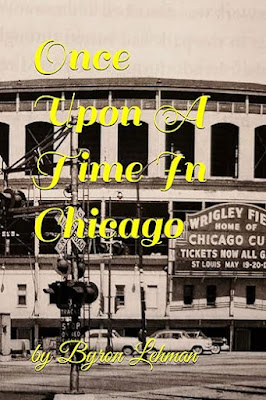
Just Released A New Novel

My novel, Once Upon A Time In Chicago, has just been
released.  The novel is available at Amazon digitally or in paperback. Give it a read. You will like it. 

A little more than four months ago, I was writing a novel. I didn’t have writer’s block but writer’s reality. The ideas for the novel were embedded in my mind. The direction of the novel was clear—reality set in. The novel I had worked so hard to develop was predictable. At least that is how it appeared to me.

At that time something kept turning over and over in my mind. It was a personal experience during the summer of 1964. I asked myself why the events of that summer repeatably rear its menacing head.  

When I was seventeen, my parents had me stay with a family in Chicago. It was 1964; innocent years by today’s standards. Once Upon A Time In Chicago is based on that week. 

The story has been told to a few friends. And again, why do I keep telling it? I don’t know. 

That became the seed for my next novel, Once Upon A Time In Chicago. It was easy to write. Bear in mind, much is fiction. Some events are exactly as remembered. 

Immediately, I feared the story would not be long enough for book-length. In my mind, that is around thirty thousand words. Things happen when you start writing. In my case, I remembered more. And I expanded on events; giving them more texture, purpose, and background. 

Now I can put that episode in my life to rest. It’s out of my mind and on the page. It’s for all the read.

Thursday, November 2, 2023

Forever Rain

She knitted. I read.
Two leather Queen Ann chairs faced the window separated by an end table with two cups of coffee on it. Beyond the window, rain as far as the imagination could carry.
It was a fall rain. It sprinkled on the deck overlooking the small lake that lapped against its pilings. The gray sky did little to dull the brightness of the maples bordering the shores, red and yellow like a blazing fire. The rain fell steady as a heartbeat with little to no variation; small drops like the tears of God and angels endlessly splashing on the deck, lake, and roof. The sound was like an endless draw on a chorus of violins.
Behind us, the crackle of a low fire in a stone fireplace; just enough to chase away the chill and dampness.
“How long did the weatherman say it was going to rain?” she said.
“Forever,” I said.
“They are getting more accurate at weather forecasting these days,” she said.
“I hope so,” I said.

Friday, September 29, 2023

Near

Todd saw dark gray clouds gather in the distance shortly after sunup. He grabbed a shovel from the garage and set it next to the house's back door. He went inside and warmed his hands over a potbellied stove in the kitchen. 
Todd tuned into the local radio station and stood with his back to the stove. The weather report forecasted a winter storm. 
Todd hustled outside, not putting on his coat. In his arms, he cradled a stack of split wood that he gathered from a lean-to shed. 
Todd cut and split two cords of wood two months earlier. He stacked it in the small lean-to shed a few yards from the back door. He did not have far to walk to retrieve firewood. He used to stack it away from the house, into the woods, fifty yards from the house. Although invigorating, when temperatures hovered around zero and below, it was brutally numbing in the dread of winter. 
He added the wood to what already was stacked beside the fireplace in the living room. He tossed two pieces in the fire and steadied them with the poker.
He heard Myra come up from the cellar stairway that was in the kitchen. 
Todd walked into the kitchen. 
“Cold enough for you?” Myra said. 
“Yeah,” Todd said. “I checked on the animals.”
“How they doing?” Myra said.
“No complaints,” Todd quipped.
“Did you hear the weather report?” Myra said.
“Yeah,” Todd said, “the clouds in the west, looks like they’re full of snow. I made sure everything was tied down. I don’t want to be repairing a barn door with the wind whistling up my pant leg.”
Within an hour the snow came and fell heavy. The wind whistled through the pines and naked oaks surrounding the house. 
Todd watched from the kitchen window. Drifted snow collected in all the familiar places; beyond the lean-to shed, near the garage, and just beyond the fence around the barn.  Myra opened a jar of canned tomatoes. She poured them into a pan on the stove.
“What are you fixing?” Todd asked.
“I thought chili would be just the thing for a cold winter night,” Myra said.
“You make the best,” Todd smiled, still watching the snow and wind.
“What’s the weather supposed to be?” Myra said. “It looks bad.”
“We don’t need to worry,” Todd said. “We made this house for days like this. I do worry about others and the animals. There’s the older couple down the road. I’ll give ‘em a call in a while to see how they’re doing.”
“Maybe take some chili down to them, if you can,” Myra said.
“You know what they’re like,” Todd smiled, “if I go down with a pot of chili, I’ll come back with a couple of pies.”
“They’re such nice folks,” Myra said stirring in a can of black beans.”
The aroma of chili filled the home. It combined later with chocolate chip cookies. 
As evening came the storm continued. It was difficult to know whether the snow remained falling or carried by the blistering wind.  
The wind died not long into the evening but its severity cut the electricity. The small house, five miles from the nearest town, sat in an emptiness of quiet and cold—as if a universe of its own. Any fears soon melted away with a fireplace full of crackling flames. The flicker of four candles spaced around the living room danced like ballerinas.
Todd and Myra sat near the fire on the floor leaning against the couch. Todd had his arm around Myra, and she snuggled close. Her head leaned against his chest.
“Your heart beats steady and slow,” Myra said.
“It is because you are near,” Todd said. 
“I feel warm when I’m near you,” Myra said.
“It’s the fire,” Todd quipped.
“I knew you would say that but you knew what I meant,” Myra said.
“Yes, I did,” Todd said, holding her with his other arm. “Holding you is like clinging to a rock during a storm at sea.”
“You’ve never been in a storm at sea,” Myra smiled.
“I’ve been in storms,” Todd said. “Not the weather but you know, just things in yourself that can make you feel like you’re drowning.”
“Is something troubling you?” Myra said.
“Like I said,” Todd said, “I have you.”
“I’m glad this is happening,” Myra said. “It gives us time to think about who we are. Do you know what I mean?”
“Yes,” Todd said. “but sometimes things like that can be depressing.”
“Why would you say that?” Myra said slightly straightening up and looking directly into Todd’s eyes. 
“How much I wanted to become someone else,” Todd said. “Something better than what I am. It’s just that every now and then I look in the mirror. It just never changes.”
“It does,” Myra said.
“No,” Todd said. “I’m the same person I was the first time I looked in the mirror and didn’t like what I saw. There was deceit, selfishness, scheming, and ugliness.”
“I don’t see how you could possibly feel that way about yourself,” Myra said.
“If you have been with me as long as I have been with me, you’d know,” Todd said.
“Many artists see only the flaws in their own work,” Myra said. “Yet, they see the beauty in the work and talent of others and those others see only the flaws in their own work. Could it not be the same with you?”
“I would just like to be somebody else,” Todd said exasperated. 
“Then what would I do?” Myra said. 
“What do you mean?” Todd said.
“It is you that I have grown to love,” Myra said. “Yes, when we first met you were deceitful, selfish, and you schemed, but you were never ugly.”
“Were you that desperate that you had to go for someone with so little character?” Todd said.
“I would have never loved that man,” Myra said. “I saw you make changes and when I saw a complete transformation I swooped in and snatched you away before someone else did.”
Todd patted Myra on the hand. “Thank you, dear. What can I do for you?”
“Nothing,” Myra said. “But when the time comes I know you’ll be there for me. Above all, Todd, that is the best of you, you are always near.”
Myra settled back into Todd’s embrace.